
August 9, 2026 — Beyond the Bit Security Trailers
What actually gets stolen from a DFW jobsite?
Mostly the things that are easiest to sell fast and hardest to trace: copper, fuel, small equipment and attachments, and whole packages of material staged out in the open. None of it needs a warehouse to move — most of it fits in a pickup bed or a trailer someone backed up to the fence line after dark.
- Copper wire and pipe, pulled right after rough-in, before it's behind drywall
- Diesel and gasoline siphoned from parked equipment and job trailers
- Skid steers, generators, and attachments left overnight without a second look
- Lumber packages and appliances staged on slabs, still in the packaging
Why does copper disappear right after rough-in?
Because that's the window when it's both accessible and valuable — installed, but not yet closed up behind a wall or poured into a slab. Once rough-in wraps and the next trade covers it, copper theft on that section of the job effectively stops being possible. Thieves know that window as well as any superintendent does, and they don't wait around for a second chance at it.
Scrap value is the other half of it. Copper is one of the few materials on a jobsite that converts to cash the same day, at a scrap yard, with no questions that slow anyone down. A skid steer is worth more, but it's harder to move and easier to trace. A spool of copper is worth less per item and disappears without a trace the moment it leaves the site.
Why do weekends and holidays matter so much?
Because that's when a site goes from occupied to empty for the longest stretch, with the fewest eyes checking on it. A weeknight might have eight or ten hours between the last truck leaving and the first one arriving. A holiday weekend can stretch that gap to three full days with nobody expected to set foot on site at all.
Thieves aren't guessing at that pattern — construction schedules are predictable, and a site that's active Monday through Friday and dead by Friday at 5 p.m. is not hard to read from the outside. The material staged on Thursday for Monday's pour sits untouched and unwatched for the entire gap in between, which is exactly the gap a visibly monitored trailer is built to close.
Is Texas really a bigger target for equipment theft?
By most industry accounts, yes — equipment-theft tracking groups have for years ranked Texas among the states with the highest reported volume of stolen construction and heavy equipment, a pattern tied to the sheer amount of active construction across the state and its long, open borders and highway corridors that make moving stolen equipment out of the area easier than in denser regions. Exact rankings shift year to year, but Texas showing up near the top has been a consistent theme, not a one-year spike.
Dallas–Fort Worth specifically compounds that risk: a metro this size means more active jobsites, more material staged in the open at any given time, and more interstate access in every direction for someone looking to move equipment quickly.
What role does the resale market play in making this so easy?
A ready buyer, no questions asked. Copper moves through scrap yards. Small equipment and attachments move through classified listings, auctions, and out-of-state buyers who never see the item in person before it changes hands. Lumber and appliances staged on a slab are, for resale purposes, indistinguishable from anything sitting in a retailer's lot — nothing about them screams "stolen" to whoever buys them next.
That's part of why prevention matters more than pursuit after the fact. Once a skid steer or a spool of copper reaches a buyer with no reason to ask where it came from, the odds of tracing it back to a specific jobsite drop fast, no matter how good the police report is.
What are the odds of getting stolen equipment back?
Not good, by most accounts, when there's no video or tracking trail to follow. Industry sources describe recovery rates on stolen heavy equipment without any footage or telematics as poor — often cited as well under half of cases recovered at all, and lower still for equipment that's been moved out of state or across a border quickly. Once equipment is gone with nothing to identify who took it or which direction they went, the trail goes cold fast.
Recovery odds without video
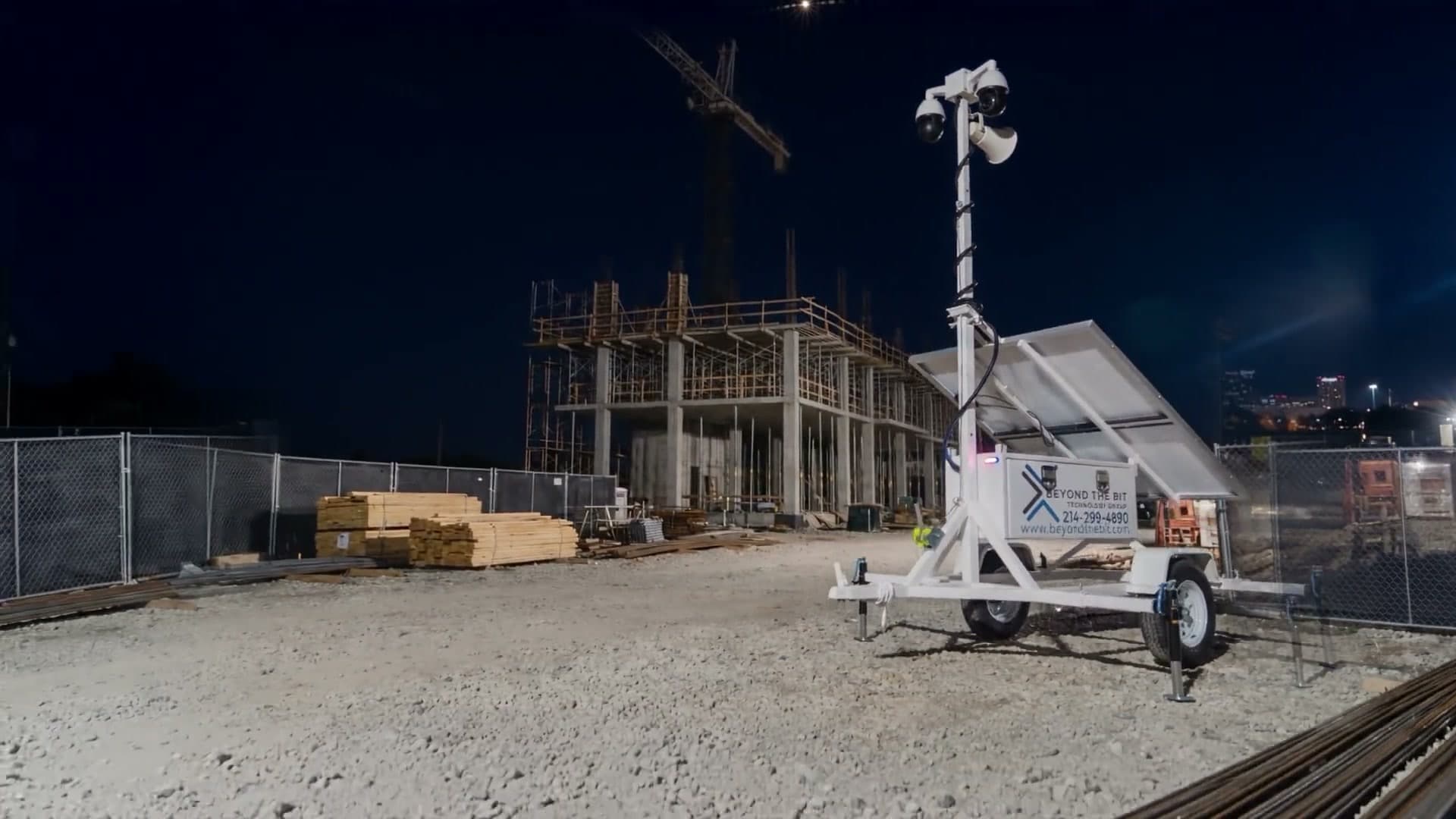
A camera trailer changes that math before theft ever gets to the recovery stage. Motion is categorized — person, vehicle, bicycle — the instant it happens, a live operator at our Texas-licensed third-party monitoring partner verifies it on video, and the trailer's strobe and speaker deliver a warning before anyone loads a single item into a truck. Deterrence that works in the moment beats a recovery process that starts after the fact.
What can a superintendent do this week, before the next long weekend?
Start with what's cheap and fast, then close the gap that actually matters. Log serial numbers and take dated photos of high-value equipment and attachments — it costs nothing and it's the difference between a police report with specifics and one with none. Lock fuel access and secure or drain tanks on equipment that's sitting idle over a holiday. Stage lumber packages and appliances as far from the fence line and public access points as the site layout allows, not just wherever the delivery truck happened to drop them.
None of that replaces a live set of eyes on the site during the exact hours nobody's there — but it does mean that if something does happen, there's more to work with than a gap in the fence and a guess about what's missing.
What does real jobsite security look like, layer by layer?
No single layer does the whole job, but each one narrows what's left for a thief to work with. Fencing sets the boundary and slows down casual access. Lighting removes the cover of darkness that makes a site an easy target after hours. A monitored camera trailer adds the layer neither of the other two can — active detection, live verification, and a real-time response while something is still happening, not a fence someone can cut or a light that just makes the theft easier to see on a recording nobody checks until Monday.
Most sites already have the first two layers. The gap is almost always the third — material staging areas and equipment rows sitting unwatched for the exact stretch of hours — a weeknight, a weekend, a holiday — when nobody expects anyone to be looking.